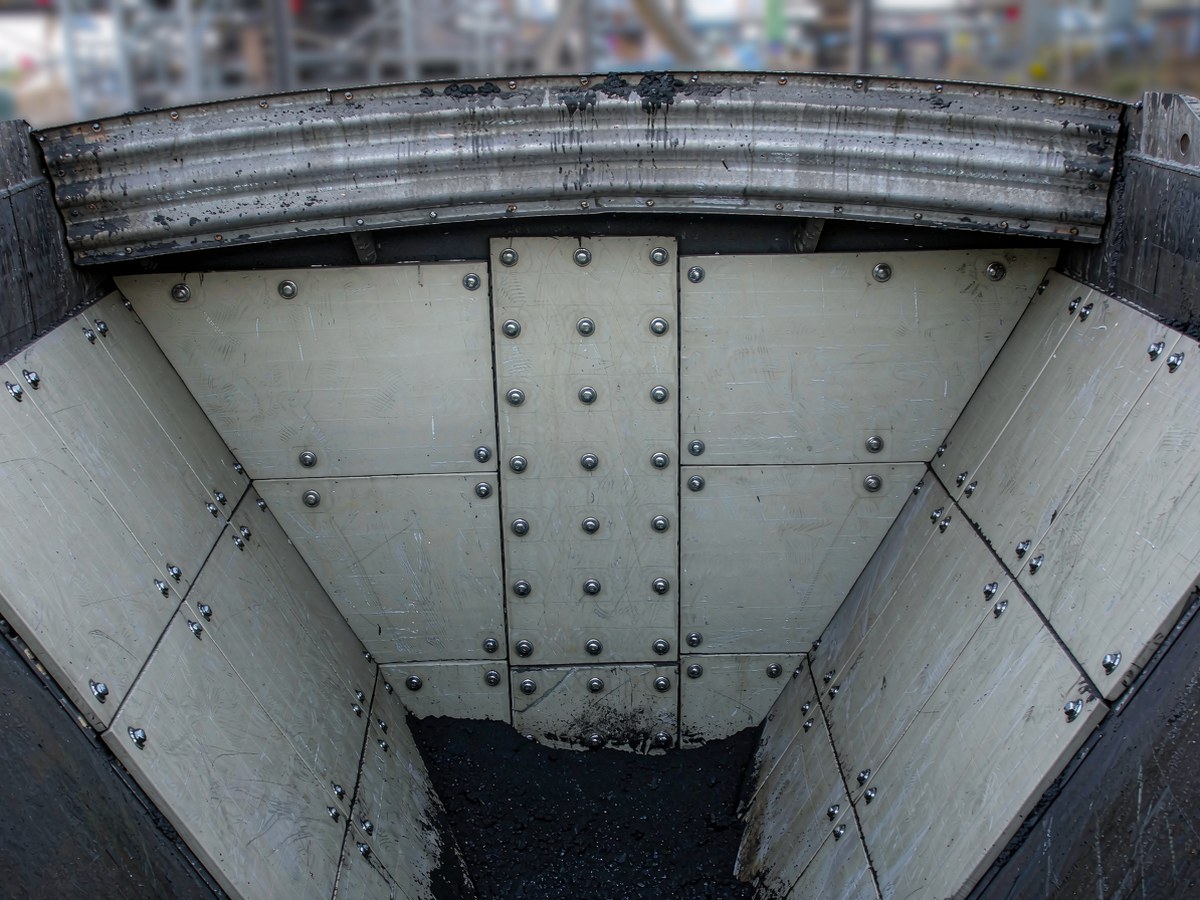
Polyethylene is a fuel. Unfilled UHMWPE sits at a limiting oxygen index of roughly 17 to 18 percent, so it sustains combustion in ordinary air with very little encouragement, and it does so with a low-viscosity melt that drips and carries fire downward. Every Flame Retardant UHMWPE Panels product is therefore a compromise: a polyolefin loaded with enough mineral or phosphorus chemistry to stop feeding a flame, while holding on to enough wear resistance to justify the material choice at all.
That is the problem in one sentence. The additive package that buys fire performance is the same package that dilutes the polymer matrix, and the matrix is what wears. Whether a sheet is a good buy depends on where the supplier landed on that trade-off, and the only way to know is to read the certificate rather than the brochure.
UL 94 is a small-scale laboratory screening test. It tells you whether a specimen self-extinguishes after a calibrated flame, and whether it drips particles that ignite cotton. HB, V-2, V-1 and V-0 are the usual ladder. It is useful for comparing formulations and close to meaningless as a construction-product classification, because the specimen is small and heat release of a real assembly is never measured. A V-0 line on a datasheet is a starting point, not an approval.
EN 13501-1 is the European reaction-to-fire classification and the one that carries legal weight in EU tenders. Classes run A1, A2, B, C, D, E, F, with subscripts for smoke (s1 to s3) and flaming droplets (d0 to d2). B and C are determined by the single burning item test to EN 13823 plus the small-flame test to EN ISO 11925-2. A polyolefin panel will not reach A1 or A2 whatever the sales email says; those classes are reserved for effectively non-combustible materials. Realistic territory for a filled UHMWPE sheet is B-s1,d0 through D-s2,d0, and thinner sheets often fall to E.
Two supporting numbers are cheap to produce and hard to fake. Limiting oxygen index to ASTM D2863 gives the minimum oxygen fraction that sustains burning: unfilled UHMWPE is near 17 to 18 percent, properly filled grades land around 26 to 32 percent. A cone calorimeter run to ISO 5660 gives peak heat release rate and total smoke, which matters when you are protecting an escape route rather than passing a paperwork check.
A complete European classification looks like B-s1,d0 or C-s1,d0 or D-s2,d0. The letter is how much the material contributes to a fire. The s subscript is smoke: s1 very limited, s2 moderate, s3 unclassified. The d subscript is flaming droplets: d0 none within the test period, d1 none persisting beyond a short interval, d2 neither limit met. In a silo gallery or transfer tower with one means of escape, s1 and d0 are not decoration. Smoke is what makes a route unusable, and droplets turn one fire into three.
When a quotation says “Class B” with no subscripts, ask for the full string in writing before the order is placed. When it says “B or better”, be careful: B and A2 are separated by a change of test regime, not a step on a scale, so a supplier offering that substitution may be crossing a regulatory line rather than upgrading you.
Fire performance in a filled thermoplastic is thickness-dependent, and usually in the direction buyers do not expect. A thin section heats through faster and can drip more readily, so a 4 mm sheet may only manage Class E while the 12 mm version of the same compound reaches C-s1,d0. The tested thickness is part of the specification, not an implementation detail.
Colour matters too. Pigments and carbon black are part of the formulation and can shift flame spread and smoke. Carbon black is often added for UV stability or conductivity, and it changes combustion chemistry enough that a test house will require a separate run. If your plant standard calls for black liners in a coal handling area, the certificate you need is a black-specimen certificate.
Density is the fastest sanity check available to a buyer. Standard UHMWPE runs about 0.93 to 0.94 g/cm3. A credible flame retardant loading of 40 to 60 percent mineral filler by weight pushes density into roughly 1.1 to 1.5 g/cm3. A Flame Retardant UHMWPE Panels sheet sold at 0.95 g/cm3 is either barely filled or mislabelled, and both are problems. Weigh a sample when the paperwork is thin.
This is where the honest conversation happens. Mineral fillers do not wear like UHMWPE. They are harder than the matrix, they interrupt the molecular orientation that gives the material its sliding character, and they raise friction slightly. Expect a measurable loss in abrasive wear and impact strength, scaling with loading.
Do not accept a vague statement that properties are “retained”. Ask for the same test on both grades: volume loss by the same abrasion method, notched impact by the same standard, elongation at break, and surface resistivity if static matters. Suppliers who test both grades the same week with the same method hand over those numbers without argument.
Design consequences follow. Where wear duty is severe and fire risk is moderate, a thin FR liner over a standard liner, or FR sheet confined to the zones where ignition sources exist, beats downgrading an entire chute. Lining every transfer point in an FR grade because one welding hotspot exists is expensive over-specification. Impact is the second casualty: filled grades are more brittle, so a liner that survived lump impacts at minus 20 C in unfilled form may crack in the filled version.
Halogen-free is now the default expectation in Europe, for good reason. Brominated retardants such as DecaBDE and HBCDD are restricted under the Stockholm Convention on persistent organic pollutants and under REACH, and the regulatory direction for the halogenated family has been one-way for years. If your product enters the EU, assume a halogenated system costs you a compliance conversation you do not want, and request a halogen-content declaration up front.
Aluminium trihydroxide, usually called ATH, is the workhorse. It decomposes endothermically around 180 to 220 C, releasing water vapour that dilutes the flame and cools the surface, and it is cheap. Its weakness is chemistry: ATH is amphoteric and reacts with acids and strong alkalis. In an acidic slurry, a pickling line or a fertiliser plant the filler can be consumed at the surface, leaving a chalky layer with degraded fire performance. On an acidic stream, this is the wrong system.
Magnesium hydroxide decomposes higher, near 330 C, and is markedly more acid-tolerant. It needs a higher loading to reach the same class, which costs density and wear, but it survives chemical service that destroys ATH. Zinc borate is often used as a synergist to promote char and suppress afterglow. Phosphorus and intumescent systems form a char layer instead of absorbing heat, work at lower loading and preserve mechanicals, but are sensitive to processing temperature and moisture.
The economics work where the liner is both a wear item and a potential ignition path. Coal bunkers, crusher discharge chutes and belt transfer points are the classic case: fugitive coal dust plus hot work plus a polymer liner is a known fire scenario, and a standard UHMWPE liner is a fuel load bolted to steel. An FR grade does not make the plant fireproof, but it removes the liner as a contributor and buys response time.
Biomass handling is the second. Wood pellets self-heat and can smoulder in a silo for hours, so the liner above a smouldering pile sees sustained low-level heat rather than a flash flame. Ask for the FR grade plus a stated continuous service temperature, and do not assume the FR package improves heat resistance. It generally does not. Underground coal work often needs a site-specific fire-resistant approval rather than a generic certificate, so confirm with the mine’s engineering department, not the liner vendor.
Flame Retardant UHMWPE Panels machine much like standard UHMWPE, but filled grades behave differently at the drill. They are more abrasive to tooling, chip more readily on the exit side, and tolerate less hole clearance error. Use sharp tooling, back the workpiece, and drill the clearance you actually need.
Thermal expansion remains the dominant installation issue. Filled grades expand slightly less than unfilled UHMWPE, which sits around 1.5 to 2.0 x 10^-4 per K, but the figure is still large enough to matter. Over a 50 K swing a one-metre panel moves roughly 8 to 9 mm. Slotted or oversized holes, a washer under each head and a clear gap at every butt joint are not optional. A liner installed with tight holes buckles in summer and tears at the fasteners in winter.
Static is the last item and the easiest to forget. In a dust hazard zone classified under ATEX or an equivalent scheme, an insulating liner accumulates charge regardless of its fire rating. If you need both, specify a combined flame retardant and anti-static grade and ask for surface resistivity on the certificate. Our anti-static UHMWPE sheet page explains the resistivity bands and how they are measured; combining the two requirements in one sheet is possible but must be tested as a combination, not assumed.
The first is a certificate covering the wrong thickness: a plant installs 20 mm liner against a report written for 6 mm, an insurer asks for evidence, and the gap surfaces at the worst moment. The second is a colour change without retesting, when procurement switches from natural to black to match a plant standard and the delivered sheet’s fire performance becomes undocumented.
The third is ATH in an acidic stream. The surface goes chalky within months, the wear rate climbs, and fire performance quietly degrades with it. The material was correct for the certificate and wrong for the chemistry. The fourth is fastener pull-through: filled UHMWPE has lower elongation and impact strength, so the fixing pattern that held an unfilled liner lets an FR liner tear out at the bolt line. Wider washers and closer spacing solve it at negligible cost.
The fifth is a category error, treating the liner as a fire barrier. It is not. It reduces fuel contribution and droplet risk. It does not protect a steel structure, stop a propagating fire, or substitute for detection and suppression.
For comparable quotes rather than three different products, send one document: the required classification as a full string including smoke and droplet subscripts, the thickness range, the colour, the process chemistry and operating temperature, the abrasion duty if known, whether the zone is classified for dust, and the standard your insurer or authority actually references.
Ask each supplier for the test report itself rather than a summary, with the specimen description visible; the active retardant family and loading; density measured on the delivered batch; limiting oxygen index; and a halogen-content declaration. Ask whether the grade has been tested at your thickness.
On our side, the flame retardant UHMWPE panels page lists the thicknesses, colours and classifications we hold documentation for, and the UHMWPE chute liner range covers the unfilled grades most transfer points actually need. If your case sits between the two, send the duty description and the classification you have to meet, and we will tell you which thickness and additive system we would test against it rather than quote the most expensive sheet on the list.